
Home | Federal Hemp Law Is Changing: What It Means in Indiana

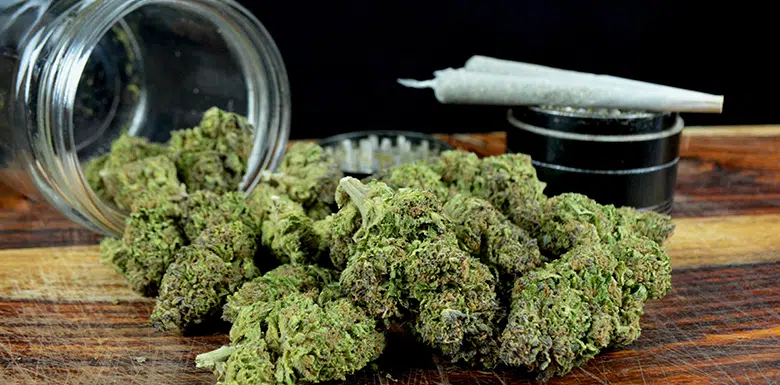
Indiana still has no general adult-use or comprehensive medical-marijuana program, and possession of statutory marijuana remains a crime. The THC gummies, beverages, and other hemp-derived products sold in Indiana grew out of the federal and state definitions of hemp. Indiana permits qualifying low-THC hemp extracts under separate rules, but a product's presence on a store shelf does not establish that it complies with those rules.
Congress has narrowed the federal definition of hemp. One part of the change took effect November 12, 2026. Most of the remaining changes are scheduled to apply on December 11, 2026. Many consumer THC products—and some full-spectrum CBD products containing trace THC—could lose federal hemp status.
Some consumers report using retail hemp products for symptoms such as pain or difficulty sleeping. FDA-approved cannabis-derived medications are a separate category. Ordinary retail hemp products have not been approved by the FDA to diagnose, treat, cure, or prevent medical conditions.
Key Points
- Federal law and Indiana criminal law are separate. A federal change does not automatically rewrite the elements of an Indiana offense, but federal law still applies in Indiana.
- Since November 12, 2026, the federal hemp definition has excluded intermediate and final products containing cannabinoids that cannabis cannot naturally produce.
- Unless Congress changes the law again, the broader total-THC standard, restrictions on cannabinoids manufactured outside the plant, and the 0.4-milligram-per-container limit are scheduled to apply on December 11, 2026.
- Indiana separately restricts marijuana, smokable hemp, and some hemp-derived products. A label, receipt, or retail display does not conclusively establish legality.
- The Indiana Attorney General considers delta-8 and several related THC variants controlled substances, but the cited federal and state cases have not finally resolved delta-8's classification under Indiana law.
- Hemp or marijuana use can also create driving-law exposure, including in some cases without proof of impairment.
See how to get involved in cannabis law reform.
How Did THC Products Become Available in Indiana?
The 2018 Farm Bill removed qualifying hemp from the federal definition of marijuana. Cannabis containing no more than 0.3% delta-9 THC by dry weight qualified as hemp. Indiana adopted a substantially similar definition.
Because the federal threshold was a concentration rather than an absolute dose, a sufficiently heavy finished product could contain a meaningful quantity of THC and still remain below the percentage threshold. The federal definition also focused on delta-9 THC rather than expressly limiting every potentially intoxicating cannabinoid. This became commonly known as the Farm Bill loophole.
Gummies, beverages, chocolates, delta-8 cartridges, and THCA flower entered the market as hemp products. That gave consumers in Indiana and other states without marijuana programs access to some products containing THC. Whether any particular product was lawful in Indiana still depended on its contents, form, and classification under Indiana law.
What Is Changing Under Federal Hemp Law?
On November 12, 2025, Congress enacted Public Law 119-37, division B, section 781. Public Law 119-103, section 2019, later delayed most of those amendments until December 11, 2026. The exclusion for products containing cannabinoids that cannabis cannot naturally produce took effect November 12, 2026.
The changes are summarized below. The Congressional Research Service's October 28, 2026 analysis provides additional background. The amended definition is codified at 7 U.S.C. § 1639o; the enacted text and delayed effective date appear in the two public laws linked above.
1. Total THC Will Determine Whether Cannabis Qualifies as Hemp
The amended federal definition uses a 0.3% total-THC dry-weight standard and expressly includes tetrahydrocannabinolic acid, or THCA. THCA converts into delta-9 THC when heated. Some cannabis flower has been marketed as hemp based on low delta-9 THC despite substantially higher THCA levels. The revised definition removes that distinction for federal hemp classification.
Federal agricultural testing rules already account for THCA. The amendment expressly incorporates total THC, including THCA, into the general statutory definition of hemp.
2. Finished Products Face a 0.4-Milligram Limit per Container
Finished hemp-derived cannabinoid products will lose federal hemp status if they contain more than 0.4 milligrams per container of combined total THC—including THCA—and other covered cannabinoids. The statute also counts cannabinoids that have or are marketed as having effects similar to THC, as determined by the U.S. Department of Health and Human Services. A “container” is the innermost retail packaging in direct contact with the product, regardless of how many servings it contains.
| Product example | THC per container | Multiple of 0.4 mg limit |
|---|---|---|
| Low-dose THC beverage | 2 mg | 5× |
| THC beverage | 5 mg | 12.5× |
| Single THC gummy | 10 mg | 25× |
| Ten 10 mg gummies packaged together | 100 mg | 250× |
Many retail THC products exceed the new limit, and some non-intoxicating full-spectrum CBD products may exceed it because they contain trace THC. A product that loses federal hemp status is subject to federal controlled-substance restrictions to the extent it falls within the federal definitions of marijuana or controlled THC. The limit applies regardless of the consumer's reason for using the product. The amended law separately addresses industrial hemp and excludes certain FDA-approved drugs from the definition of a hemp-derived cannabinoid product.
3. Restrictions on Manufactured and Synthetic Cannabinoids
Since November 12, 2026, the federal definition has excluded intermediate and final products containing cannabinoids that cannabis cannot naturally produce. Additional exclusions for cannabinoids that can occur naturally but are synthesized or manufactured outside the plant are scheduled for December 11, 2026. Commercial delta-8 is frequently produced by chemically converting CBD.
Why Is Congress Restricting Hemp-Derived THC Products?
Supporters of the restrictions cite concerns about youth access, inaccurate labeling, contaminants, chemical conversion, packaging resembling candy, and inconsistent regulatory standards for intoxicating products.
Opponents argue that the 0.4-milligram-per-container threshold goes far beyond addressing those concerns. They contend that it would remove many THC products from the hemp market, reduce access for consumers who use them for symptom relief, and threaten farmers, manufacturers, and small businesses. They point to age limits, independent testing, accurate labeling, manufacturing standards, and dosage limits as possible alternatives.
The debate concerns public health, consumer protection, medical access, personal liberty, agricultural policy, and criminal justice. A product's potential to intoxicate does not establish that intoxication is every consumer's purpose.
Does the New Federal Law Automatically Make These Products Illegal in Indiana?
No single answer covers every product. Federal law and Indiana criminal law apply separately.
Indiana Code § 15-15-13-6 defines hemp using a delta-9 THC concentration no greater than 0.3% by dry weight. Indiana's definition of marijuana in Indiana Code § 35-48-1.1-29 excludes hemp, low-THC hemp extract, and smokable hemp as those terms are defined by Indiana law. Under Indiana Code § 35-48-1.1-27, a low-THC hemp extract can contain no more than 0.3% total delta-9 THC by weight, including its precursors, and no other controlled substances. Smokable hemp is excluded from that definition and is subject to a separate criminal statute.
Congress's amendment changes federal law; it does not itself rewrite Indiana's statutory elements. Indiana's existing classification rules and criminal restrictions still apply, and conduct can violate federal law even if a state-law exception applies. Using marijuana for symptom relief does not create a general exemption from Indiana's possession law.
Indiana Tried to Change Its Hemp Laws in 2026
Senate Bill 250 proposed substantial changes to Indiana hemp regulation. It passed the Senate 35–13 on January 28, 2026, and received House committee approval, but the full House did not pass it.
The House also temporarily added THC and hemp language to Senate Bill 144, but the final conference and enrolled version omitted those provisions. Indiana therefore did not adopt the proposed hemp overhaul during the 2026 session. Lawmakers may revisit the issue in 2027.
Are Delta-8 THC and Other Hemp-Derived Products Already Illegal in Indiana?
The Indiana Attorney General's Opinion
Official Opinion 2023-1, issued January 12, 2023, at the request of the Indiana State Police superintendent and the executive director of the Indiana Prosecuting Attorneys Council, concludes that delta-8, delta-10, THCP, THC-O, and certain other THC variants are Schedule I controlled substances. The opinion is advisory. It reflects the Attorney General's interpretation, but it is not itself a statute or binding court decision.
The Federal Challenge to the Attorney General's Opinion
In 3C, LLC d/b/a 3CHI v. Rokita, hemp businesses and the Midwest Hemp Council challenged the Attorney General's interpretation. On March 18, 2025, the Southern District of Indiana dismissed the case without prejudice for lack of subject-matter jurisdiction. The court concluded that the requested relief would not redress the plaintiffs' alleged injuries. It did not decide the merits of delta-8's status under Indiana law.
An Indiana Prosecution Involving Alleged Delta-8 Cartridges
In State v. Dickens, No. 24A-CR-1912 (Ind. Ct. App. May 6, 2025), the probable-cause affidavit described thirteen delta-8 vape cartridges. The charging information alleged THC offenses, including Level 2 felony dealing and Class A misdemeanor possession, without specifying delta-8. The Court of Appeals reversed the pretrial dismissal because the charging information adequately alleged offenses. Whether the cartridges actually contained a controlled substance was a factual question for trial. The court did not decide whether delta-8 is a controlled substance under Indiana law.
What About Hemp Flower and THCA Flower?
Indiana Code § 35-48-4-10.1 calls the offense “dealing in smokable hemp.” It is a Class A misdemeanor and covers knowing or intentional possession, manufacture, financing the manufacture of, delivery, or financing the delivery of smokable hemp, subject to statutory exceptions. The definition of smokable hemp expressly includes hemp buds and flowers. It covers products intended to allow THC to be introduced into the body by inhaling smoke and uses a 0.3% delta-9 THC ceiling that includes precursors and derivatives.
In C.Y. Wholesale, Inc. v. Holcomb, 965 F.3d 541 (7th Cir. 2020), the Seventh Circuit vacated a broad preliminary injunction against Indiana's law, distinguishing federally protected interstate transportation from in-state activity.
Indiana appellate decisions describe the hemp–marijuana distinction in terms of delta-9 THC concentration. Akins v. State explains that hemp and marijuana may be indistinguishable by sight or smell and that their legal distinction turns on delta-9 THC concentration. Akins did not decide a THCA classification question. The statutes separately matter: a high THCA result is not itself the state hemp definition's delta-9 measurement, while the low-THC-extract and smokable-hemp definitions expressly account for precursors. A low delta-9 result alone therefore does not establish that flower is lawful for an ordinary consumer to possess.
What About THC Products Purchased Before the Law Changes?
The federal amendments contain no express grandfather clause for products purchased before the applicable effective dates. The law in effect during continued possession may matter even if the original purchase was lawful. Indiana classification remains a separate question. A receipt may help establish when and where a product was purchased, but it does not determine the product's contents or legal status.
What Are the Potential Criminal Penalties in Indiana?
The potential charge depends on the substance's statutory classification, weight, alleged conduct, prior convictions, and any enhancing circumstances.
| Offense | Indiana Code | Possible classifications |
|---|---|---|
| Marijuana possession | § 35-48-4-11 | Class B or A misdemeanor; Level 6 felony |
| Marijuana dealing | § 35-48-4-10 | Class A misdemeanor; Level 6 or 5 felony |
| Dealing in smokable hemp, including possession | § 35-48-4-10.1 | Class A misdemeanor |
| Schedule I controlled-substance possession, where § 7 applies | § 35-48-4-7 | Class A misdemeanor; Level 6 felony |
| Schedule I controlled-substance dealing, where § 2 applies | § 35-48-4-2 | Level 6, 5, 4, 3, or 2 felony |
Dealing in Marijuana: Misdemeanor and Felony Thresholds
| Classification | Illustrative statutory criteria |
|---|---|
| Class A misdemeanor | Base offense, absent an applicable enhancement |
| Level 6 felony | Marijuana 30 grams to less than 10 pounds; hash oil or hashish 5 grams to less than 300 grams; or a qualifying prior drug conviction with smaller amounts |
| Level 5 felony | Marijuana at least 10 pounds; hash oil or hashish at least 300 grams; a qualifying intermediate weight and prior drug-dealing conviction; sale to a minor; or qualifying deceptive retail packaging |
See Indiana Code § 35-48-4-10 for the precise elements and enhancements.
Dealing in a Schedule I Controlled Substance: Felony Thresholds
If the prosecution classifies a THC variant under § 35-48-4-2 rather than the marijuana-dealing statute, the potential penalties are substantially greater.
| Drug weight | Without statutory enhancing circumstance | With statutory enhancing circumstance |
|---|---|---|
| Less than 1 gram | Level 6 felony | Level 5 felony |
| 1 gram to less than 5 grams | Level 5 felony | Level 4 felony |
| 5 grams to less than 10 grams | Level 4 felony | Level 3 felony |
| 10 grams to less than 28 grams | Level 3 felony | Level 2 felony |
| 28 grams or more | Level 2 felony | Level 2 felony |
These are statutory drug-weight categories, not necessarily the milligrams of active THC shown on a product label. The applicable substance, mixture, weight, intent, and enhancing circumstances must be determined under the statute and evidence. See Indiana Code § 35-48-4-2.
Indiana Sentencing Ranges and Maximum Fines
| Classification | Incarceration range or maximum | Maximum fine |
|---|---|---|
| Class B misdemeanor | Up to 180 days | $1,000 |
| Class A misdemeanor | Up to 1 year | $5,000 |
| Level 6 felony | 6 months–2½ years | $10,000 |
| Level 5 felony | 1–6 years | $10,000 |
| Level 4 felony | 2–12 years | $10,000 |
| Level 3 felony | 3–16 years | $10,000 |
| Level 2 felony | 10–30 years | $10,000 |
See Indiana Code chapter 35-50-2 and chapter 35-50-3. These are statutory ranges, not predictions of an actual sentence. As Dickens illustrates, the State may pursue serious felonies, but it must prove the elements of the charged offense. Federal reclassification alone does not establish those elements.
Can Police Distinguish Legal Hemp From Illegal Marijuana?
Proving Marijuana Possession Beyond a Reasonable Doubt
In Fedij v. State, 186 N.E.3d 696 (Ind. Ct. App. 2022), the court reversed a marijuana conviction where the admissible evidence did not establish the required THC concentration. Toledo Rojo v. State, 202 N.E.3d 1085 (Ind. Ct. App. 2022), addressed why sight and odor do not distinguish marijuana from hemp. In Lakes v. State, 224 N.E.3d 373 (Ind. Ct. App. 2024), a positive marijuana field test did not establish the required concentration.
A THC-positive test alone may not establish an Indiana marijuana offense. If federal and state definitions diverge, the State's burden in an Indiana prosecution remains governed by Indiana law.
Probable Cause to Conduct a Search
Probable cause to search requires less evidence than proof beyond a reasonable doubt. In Moore v. State, 211 N.E.3d 574 (Ind. Ct. App. 2023), the court considered marijuana odor with other circumstances when upholding a search. In Akins v. State, No. 24A-CR-2140 (Ind. Ct. App. Feb. 6, 2026), the court explained that hemp legalization may reduce the weight of a drug-detection dog's alert but that the alert can still support probable cause when considered with the surrounding circumstances. The legality of a search depends on the full factual context.
Is Commercial Packaging Evidence That a Product Is Legal?
Indiana imposes labeling and packaging requirements for low-THC hemp extracts. Packaging alone does not conclusively establish a product's composition or legality. Indiana's marijuana possession and dealing statutes include enhancements involving products packaged to resemble low-THC hemp extract when the specified knowledge standard and other elements are met. Receipts, labels, and laboratory reports can be relevant evidence, depending on the facts.
Can Legal Hemp Lead to an Indiana Driving Charge?
Yes. Indiana Code § 9-30-5-2 prohibits operating a vehicle while intoxicated, even if the substance was lawfully obtained. Indiana Code § 9-30-5-1(c) creates a separate Class C misdemeanor for operating with a Schedule I or II controlled substance or its metabolite in the blood. That offense does not require proof of intoxication.
The statute contains specific defenses. One applies to a substance used under a valid prescription. Another applies to marijuana or its metabolite only when the person was not intoxicated, did not cause a traffic accident, and submitted to a chemical test under Indiana Code chapter 9-30-7. Whether a defense applies depends on the evidence and the exact charge.
Wemes v. State, No. 25A-CR-2491 (Ind. Ct. App. June 3, 2026) involved Indiana Code § 9-30-5-5(a)(2), which addresses causing death or catastrophic injury while operating with a controlled substance or its metabolite in the blood. For that different offense, the court held that the State did not have to prove impairment or that the THC came from marijuana rather than hemp.
For more background, see Hessler Law's guides to Indiana marijuana charges and Indiana OWI law.
Which Hemp and Marijuana Products Will Be Affected?
| Product | Existing Indiana law | Scheduled or current federal restriction |
|---|---|---|
| Marijuana | Statutory marijuana possession remains criminal; Indiana has no general adult-use or comprehensive medical-marijuana program | No new hemp exemption |
| Hemp-derived delta-9 gummies and beverages | Potentially lawful if they satisfy Indiana's rules | Scheduled to lose hemp status if they exceed the 0.4-milligram-per-container limit or meet another exclusion |
| Delta-8 gummies and cartridges | Disputed; the Attorney General considers delta-8 a controlled substance | Delta-8 manufactured outside the plant is scheduled for exclusion on December 11 |
| Smokable hemp flower | Ordinary consumer possession is generally prohibited | Additional restrictions may apply depending on composition |
| THCA flower | Delta-9 concentration matters to marijuana classification; separate smokable-hemp rules account for precursors | THCA is included in the scheduled federal total-THC standard |
| THC-O | The Attorney General considers it a controlled substance | A product may already be excluded if it contains a cannabinoid that cannabis cannot naturally produce |
| CBD isolate | Potentially lawful if compliant | May retain hemp status if it complies with the amended definition |
| Full-spectrum CBD | Potentially lawful if compliant | Some products may exceed the scheduled limit because they contain trace THC |
| Industrial hemp fiber and textiles | Generally lawful | The amended law separately preserves qualifying industrial hemp |
Classification depends on the specific product, evidence, and law in effect on the relevant date. A medical-use claim, retail receipt, or certificate of analysis does not settle every legal question.
How Could These Changes Affect Criminal Defense Cases?
A criminal-defense analysis may need to address the statutory classification of the substance, any exemption, relevant THC concentrations, whether the testing distinguishes cannabinoids, applicable drug weight, manufacturing method, proof of criminal intent, legality of the search, packaging, and which law applied on the alleged offense date. A positive THC test does not resolve all those questions. Divergence between federal and Indiana definitions may make statutory interpretation and reliable laboratory evidence increasingly important.
What Happens Next?
Unless Congress changes the law again, most remaining federal restrictions are scheduled to apply on December 11, 2026. On November 17, 2026, senators introduced the Hemp Guardrails Act, S. 5736, proposing a different federal regulatory framework. The bill's introduction did not enact it or change the scheduled deadline.
Indiana lawmakers may revisit hemp and marijuana policy in 2027. Until the law changes, a product's availability or advertised legality does not establish that its possession or distribution complies with federal and Indiana law.
What Can You Do If You Disagree With Indiana's Hemp and Marijuana Laws?
Understanding the law does not mean agreeing with it. People who support preserving access to hemp products, establishing an Indiana medical-marijuana program, decriminalizing possession, legalizing adult use, or pursuing other cannabis reforms can participate in the legislative process.
Contact Your Federal Legislators
Congress can amend, postpone, or repeal the federal restrictions or establish an alternative framework. Indiana residents can communicate their views to:
Identify the policy issues important to you, including medical access, consumer protection, small businesses, agriculture, or federal marijuana reform.
Contact Your Indiana State Legislators
State-level cannabis reforms generally require action by the Indiana General Assembly. Residents can contact their state senator and representative and communicate their views to the governor without waiting for a particular bill to be introduced.
- Find your Indiana legislators
- Indiana General Assembly legislation and hearings
- Contact the Governor of Indiana
Decide What Type of Cannabis Reform You Support
Policy alternatives include regulated access to hemp products, an Indiana medical-marijuana program, decriminalization, a regulated adult-use market, sentencing and expungement reforms, and reconsideration of driving laws that criminalize the presence of THC or its metabolites without proof of impairment. A person may support one approach without supporting all of them.
Cannabis and Hemp Law Reform Organizations
- Indiana NORML: Indiana marijuana-law reform, medical access, and consumer advocacy.
- National NORML: National marijuana reform and consumer rights, including a Take Action Center.
- Marijuana Policy Project: State and federal reform, including medical-cannabis access, decriminalization, and adult-use legalization.
- Midwest Hemp Council: Regional hemp-industry advocacy and regulation.
- U.S. Hemp Roundtable: Federal hemp policy and access to hemp products, including legislative news and advocacy.
- Law Enforcement Action Partnership: Current and former police officers, prosecutors, judges, and other criminal-justice professionals advocating evidence-based drug policy and criminal-justice reform. As a former prosecutor and practicing criminal-defense attorney, I am also a LEAP member. See LEAP's drug-policy work.
These organizations have different priorities. Readers can evaluate their positions independently.
Other Ways to Participate
Residents can attend public committee hearings, provide testimony when permitted, attend town halls, meet with elected officials, participate in public discussion, or volunteer with organizations that reflect their views. They can also review candidates' public positions and legislative records and participate in elections. The Indiana Voter Portal provides registration and election information.
Indiana's Cannabis Laws Are Not Permanent
Criminal laws are legislative policy choices. They can be enacted, amended, or repealed. Whether the concern is medical access, personal liberty, public safety, agriculture, small businesses, criminal justice, or law-enforcement resources, residents can communicate those concerns to the people responsible for making the law.
Until the law changes, however, disagreement with an existing criminal statute does not create a legal defense to violating it.
Hessler Law, PC publishes this article for general educational and informational purposes. It is not legal advice and does not create an attorney-client relationship. Hemp and cannabis laws are changing rapidly. This article reflects the law as understood on November 26, 2026.